
A foundation is an asset dedicated by a founder to a specific purpose. Foundations have no members or shareholders. For this reason, foundations are also referred to as legal entities without owners.

In 1993, Austria introduced the new legal form of the private foundation (Privatstiftung) because the other statutorily regulated forms of foundation did not meet the needs of modern commercial life and the typical objectives of founders. The private foundation has become indispensable to Austrian legal and commercial practice. Its substantial importance for the Austrian economy and for Austria as a business location is reflected in the fact that private foundations hold directly or indirectly controlling interests in significant companies and in approximately half of the listed companies in the ATX. The majority of the 100 largest Austrian family businesses are also held through private foundations. In the charitable sector, too, private foundations make a significant contribution, whether directly in pursuing charitable purposes or indirectly through their donation volume.
Currently, approximately 2,950 private foundations are registered in the Austrian Companies Register. For a search of private foundations registered in the Austrian Companies Register, together with their foundation board, see companydesk.eu. The private foundation has thus firmly established itself as the leading form of foundation in Austria.
The statutory basis of the private foundation is the Austrian Private Foundation Act (PSG). Under section 1 paragraph 1 PSG a private foundation is a legal entity to which assets have been dedicated by a founder so that, through their use, administration and realisation, a permissible purpose determined by the founder may be served; it has legal personality and must have its seat in Austria. A private foundation may be established both inter vivos and by will. Depending on the foundation purpose and the circle of beneficiaries, a distinction is drawn between charitable and private-benefit (self-serving) private foundations. Charitable purposes are those by which the general public is promoted. Private-benefit private foundations typically provide for the benefit of specifically identifiable persons (such as members of a family; so-called family foundations).
Certain activities are not permitted to a private foundation: it may not carry on commercial activities going beyond mere ancillary activity, it may not act as managing partner of a commercial company, and it may not be an unlimited liability partner of a registered partnership (section 1 paragraph 2 PSG). Business assets are therefore regularly held through participations in capital companies.
Alongside private foundations under the PSG, Austria also recognises charitable foundations under the Federal Foundations and Funds Act (BStFG) as well as foundations established on the basis of provincial or special legislation. The Austrian Broadcasting Corporation (ORF) is likewise a foundation established on a special-law basis under the ORF Act.
The full statutory text with a systematic index of case law for each paragraph and subparagraph is available at Private Foundation Act (PSG).

A private foundation serves above all to preserve assets across generations and to administer them, independently of succession, in accordance with a purpose defined by the founder. Typical applications include succession in family businesses, where the shareholding is pooled in the private foundation and the fragmentation among heirs is avoided; the provision for family members under clear rules set out in the deed of foundation; and the permanent promotion of charitable purposes.
Whether a private foundation is the right structure in an individual case depends on the assets, the family and business situation and the objectives of the founder. In particular, the ongoing costs of the bodies (foundation board, foundation auditor), the accounting obligations and the fact that the founder transfers the dedicated assets out of his or her control and may exercise influence only through the rights reserved in the deed of foundation must be taken into account.
Foundations are not an invention of the modern age. They are found in ancient Greece as well as in the Roman Empire and in Egypt. One of the earliest examples is the Academy of Plato, founded in 347 BC and lasting until 529 AD (on this history see also Strachwitz in Stiftungen (Aachen 1996), 90). Many monasteries trace their origins to foundations, as do significant social institutions. In certain respects, foundations are comparable to the trust familiar above all from Anglo-American law.
Historically, charitable purposes were in the foreground. However, there are already medieval examples of mixed-purpose foundations which also provided for the descendants of the founder (see for example the European Court of Human Rights, judgment of 5 July 2022, Dimici v Turkey, application no. 70133/16, concerning the Oerfioglu foundation).
The private foundation is established by a deed of foundation executed by the founder or founders. This deed of foundation may be divided into a deed of foundation and a supplementary deed of foundation (Austrian Supreme Court, 22 October 2020, 6 Ob 200/20k). The supplementary deed of foundation is not to be disclosed to the Companies Register; it is therefore also not accessible to the public through the register of documents. The execution of the deed of foundation requires the form of a notarial deed. In the case of a private foundation established by will, the form of a testamentary disposition must also be observed.
The deed of foundation must in any event contain the dedication of the assets, the foundation purpose, the designation of the beneficiaries or of the body which is to designate the beneficiaries, the name and seat of the private foundation, the particulars of the founder and the indication whether the private foundation is established for a determined or indeterminate period (section 9 paragraph 1 PSG). In addition, it may in particular contain provisions on the bodies, the amendment of the deed of foundation, revocation, beneficiaries and ultimate beneficiaries (section 9 paragraph 2 PSG).
The private foundation comes into existence only upon registration in the Companies Register (section 7 paragraph 1 PSG). The application for registration is incumbent on the first foundation board (section 12 PSG). If the minimum assets are not contributed in cash, a formation audit must be carried out (section 11 PSG).
At least EUR 70,000 (the so-called minimum endowment) must be dedicated to the private foundation. In addition to the minimum endowment, additional cash or assets in kind may be transferred on the occasion of the formation of the private foundation or thereafter, whether in the deed of foundation, in the supplementary deed of foundation or outside these documents. Subsequent dedications of assets by a founder outside the deed of foundation are referred to as supplementary endowments by the founder; where the dedication is made by a third party (that is, a person who is not a founder), the term additional endowment has become established. A person who dedicates assets to the private foundation after its coming into existence does not thereby acquire the status of founder (section 3 paragraph 4 PSG).
Possible founders of a private foundation inter vivos are one or more natural persons (human beings) or other legal entities (limited liability company, stock corporation, Liechtenstein establishment (Anstalt), general or limited partnership, etc.). In the case of a private foundation established by will, only a single natural person may acquire founder status. According to the prevailing view, a subsequent acquisition of founder status is not possible (Austrian Supreme Court, 12 August 2004, 1 Ob 166/04z; Austrian Supreme Court, 14 September 2011, 6 Ob 158/11w). To perpetuate founder rights, a broad definition of the group of founders (for example the inclusion of children and grandchildren) or the interposition of other legal entities (for example a Liechtenstein establishment) is usually appropriate.
If a private foundation has several founders, the rights which are vested in or reserved to the founder may be exercised only by all founders jointly, unless the deed of foundation provides otherwise (section 3 paragraph 2 PSG). Rights of the founder to shape the private foundation do not pass to his or her legal successors (section 3 paragraph 3 PSG). The central rights of design are the reserved right of amendment and the reserved right of revocation; both exist only if the founder has reserved them in the deed of foundation (section 33 paragraph 2, section 34 PSG). A founder who is a legal person cannot reserve a right of revocation (section 34 PSG).
Beneficiaries are all persons who receive distributions from the private foundation or to whom the benefits of the private foundation accrue (Austrian Supreme Court, 18 February 2021, 6 Ob 24/21d). Distributions by the private foundation may consist of cash as well as benefits in kind (cash, the use of premises, assumption of guarantees, etc.). The closer definitions in this regard should be included in the deed of foundation (deed of foundation or supplementary deed of foundation). Beneficiaries may, where appropriate, also be granted an enforceable claim. In addition to their statutory right of information, they may also be involved in the foundation organisation (for example through an advisory board or an assembly of beneficiaries) (Austrian Supreme Court, 5 August 2009, 6 Ob 42/09h). Acceptance of a mandate as member of the foundation board is, however, prohibited for beneficiaries, their spouses, registered partners and cohabiting partners and their close relatives (as well as persons placed on an equal footing with them) (Austrian Supreme Court, 15 December 2004, 6 Ob 180/04w).
If the beneficiary is not designated in the deed of foundation, the beneficiary is the person who has been designated as such by the body appointed by the founder for that purpose, otherwise by the foundation board (section 5 PSG). The beneficiary’s right of information covers information on the fulfilment of the foundation purpose as well as inspection of the annual financial statements, the management report, the audit report, the books, the deed of foundation and the supplementary deed of foundation; if the private foundation does not comply with the request, the court may order inspection (section 30 PSG).
Ultimate beneficiaries are the persons to whom the assets remaining after liquidation accrue upon dissolution of the private foundation. More detailed provisions may (and should) be included in the deed of foundation. In the absence of such provisions, the founders are the ultimate beneficiaries in the case of a revocation of the private foundation. If there is no ultimate beneficiary and no provision follows from the deed of foundation, the remaining assets accrue to the Republic of Austria (section 36 paragraph 3 PSG).
The foundation board administers and represents the private foundation and ensures the fulfilment of the foundation purpose. It must consist of at least three members, of whom at least two must have their ordinary residence in the European Union or in a Contracting State of the European Economic Area. Beneficiaries, their spouses, registered partners and cohabiting partners and close relatives of beneficiaries (and persons placed on an equal footing with them) cannot be members of the foundation board.
In addition to appointment of foundation board members by the court, founders may reserve the right of appointment or secondment of foundation board members for their lifetime. The authority may likewise be transferred to other persons or bodies (for example an advisory board). Also frequently encountered are arrangements in which the foundation board itself decides on the replacement of a departing member (so-called co-optation).
Members of the foundation board may in principle only be dismissed for cause (Austrian Supreme Court, 11 December 2024, 6 Ob 14/24p). To this end, a (maximum) term of office should be provided for their activity (flexible arrangements may strike a balance between the independence of the foundation board and the influence desired by the founders). Case law further requires a minimum term of office of three years (Austrian Supreme Court, 25 November 2020, 6 Ob 228/20b).
Each member of the foundation board must perform his or her duties economically and with the care of a diligent business manager; distributions to beneficiaries may be made by the foundation board only to the extent that claims of creditors of the private foundation are not thereby diminished (section 17 paragraph 2 PSG). Where the private foundation has no supervisory board, legal transactions of the private foundation with a member of the foundation board require the approval of all other members and of the court (section 17 paragraph 5 PSG). The members are liable to the private foundation for any damage arising from a culpable breach of their duties (section 29 PSG). Unless the deed of foundation provides otherwise, they are entitled to appropriate remuneration, the amount of which is determined by the court upon application (section 19 PSG).
The scope of the foundation auditor’s remit is comparable to that of the auditor of a company. The foundation auditor must be a certified public accountant or an audit firm. The foundation auditor is a supervisory body through which the activities of the (other) bodies of the private foundation are to be continuously monitored. If the private foundation does not have a supervisory board, the foundation auditor is appointed by the court (Austrian Supreme Court, 26 March 2025, 6 Ob 2/25z); the deed of foundation may, however, provide for a right of proposal (for example for an advisory board).
As a further governance instrument, the figure of the foundation protector, originating in the Liechtenstein regime, is increasingly used in Austrian structures to separate the operational level of board activity from a superior supervisory level, in particular to safeguard the founder’s will across generations. For the assumption of this function in Austria and Liechtenstein and for questions on the specific design of protector powers see the specialist portal stiftungsprotektor.com.
A supervisory board must be appointed where the private foundation employs more than three hundred employees or where it exercises unified management over domestic capital companies or cooperatives or holds more than 50 per cent of them directly, where those entities employ on average more than three hundred employees and where the activity of the private foundation is not confined to the administration of participations (section 22 PSG). In addition, the deed of foundation may provide for a supervisory board. The supervisory board consists of at least three natural persons; beneficiaries and their relatives may not constitute the majority (section 23 PSG). It supervises the management and the affairs of the private foundation (section 25 PSG).
In addition, founders may install further foundation bodies to safeguard the foundation purpose (e.g. advisory board, assembly of beneficiaries, assembly of founders, etc.; Austrian Supreme Court, 18 November 2022, 6 Ob 174/22i). Further bodies are essential instruments for granting the founder and future generations the ability to influence the activity of the foundation board and the affairs of the private foundation (Austrian Supreme Court, 19 April 2017, 6 Ob 37/17k). For example, the appointment of foundation board members may be transferred (to the greatest possible extent) to an advisory board.
Where such a body has the right to dismiss the foundation board or one of its members, the decision requires a qualified majority; where dismissal is to take place on grounds other than those set out in section 27 paragraph 2 numbers 1 to 3 PSG, beneficiaries, their relatives and their representative bodies may together not hold the majority of votes (section 14 paragraphs 3 and 4 PSG). Where an advisory board is designed in a manner similar to a supervisory board, the courts apply the incompatibility rule of section 23 paragraph 2 PSG by analogy (Austrian Supreme Court, 9 September 2013, 6 Ob 139/13d).
After the private foundation has come into existence, the founder may amend the deed of foundation only if he or she has reserved the right to make amendments. If an amendment is not possible due to the lapse of a founder, due to lack of agreement among several founders or due to the absence of a reservation, the foundation board may, while safeguarding the foundation purpose, make amendments to adapt to changed circumstances; these require the approval of the court (section 33 paragraph 2 PSG). The changed circumstances must not already have existed at the time the deed of foundation was executed (Austrian Supreme Court, 17 January 2024, 6 Ob 40/23k). Any amendment becomes effective only upon registration in the Companies Register (section 33 paragraph 3 PSG).
The private foundation may be revoked by the founder only if he or she has reserved revocation in the deed of foundation (section 34 PSG). The private foundation is dissolved, among other things, upon expiry of the determined duration, by unanimous resolution of the foundation board or by order of the court; the foundation board must resolve on dissolution in particular where a lawful revocation has reached it, where the foundation purpose has been attained or is no longer attainable, or where a non-charitable maintenance foundation has existed for 100 years and the ultimate beneficiaries do not resolve on continuation (section 35 PSG). After liquidation, the remaining assets are to be transferred to the ultimate beneficiary (section 36 PSG).
Assets dedicated by the founder to the private foundation leave his or her estate. For the calculation of the forced heirship (Pflichtteil), they are nevertheless to be taken into account where the asset depletion (Vermoegensopfer) occurred within two years before the founder’s death. A comprehensive, founder-only reserved right of amendment prevents the asset depletion, so that the period begins to run only upon the death of the founder (Austrian Supreme Court, 15 October 2024, 2 Ob 66/24f).
By decision of 26 March 2026 the Austrian Supreme Court clarified the right of information of forced heirs against the private foundation; interests of confidentiality of the private foundation do not stand in the way of such information (Austrian Supreme Court, 26 March 2026, 2 Ob 115/25p). For a detailed treatment see compulsory share in Austria on testament.wien.
Marriage and family law also require attention to the private foundation: where the founder holds a comprehensive right of revocation, the foundation assets may be economically attributed to the founder in post-marital division (Austrian Supreme Court, 30 July 2025, 1 Ob 69/25s). The case law on inheritance, maintenance and divorce is summarised in the general part of the systematic decision index.
The taxation of the private foundation follows its own rules. The dedication of assets to the private foundation is subject to foundation entry tax (Stiftungseingangssteuer). The private foundation itself is subject to corporate income tax, with special rules for private-benefit private foundations governing the taxation of certain capital income and gains on disposals. Distributions to beneficiaries are in principle subject to capital gains tax (Kapitalertragsteuer). Charitable private foundations may claim fiscal privileges.
The statutory minimum endowment is EUR 70,000 (section 4 PSG). From an economic point of view, a private foundation is generally only sensible with substantially higher assets, given the ongoing costs.
Costs incurred include in particular the drafting of the deed of foundation by a lawyer or notary, the notarial deed, the registration in the Companies Register and the foundation entry tax; on an ongoing basis the remuneration of the foundation board, the costs of the foundation auditor and of accounting are added. The amount depends on the assets and the structure.
Above all when assets or a business are to be held together across generations and administered according to clear rules. Whether it is the right solution in an individual case requires a balancing of objectives, costs and influence.
The private foundation has no owners. Depending on whether and to what extent founders have reserved influence, the case law has developed the concepts of a controlled or uncontrolled foundation. The private foundation is represented by the foundation board, which is in principle not subject to directions and which in turn is supervised by the foundation auditor. Supervisory functions may also be exercised by the supervisory board, by an advisory board, in part also by beneficiaries or by the court.
Beneficiaries, their spouses and cohabiting partners and persons related to beneficiaries in direct line or up to the third degree of the collateral line cannot be members of the foundation board (section 15 paragraph 2 PSG). Family members who are not beneficiaries and who do not stand in such a close relationship to beneficiaries are not covered by the incompatibility rule.
Yes, by revocation if the founder has reserved it (section 34 PSG), as well as on the dissolution grounds of section 35 PSG. After liquidation, the remaining assets are received by the ultimate beneficiary.
The private foundation continues to exist. Rights of design of the founder, in particular rights of amendment and revocation, do not pass to the heirs (section 3 paragraph 3 PSG). For the calculation of the forced share, the dedicated assets may be taken into account.
The dedication of assets is subject to foundation entry tax; the private foundation itself is subject to corporate income tax with special rules on interim tax; distributions to beneficiaries are in principle subject to capital gains tax.
An overview by lawyer Dr. Nikolaus Arnold on the formation, founders, beneficiaries, bodies, amendment and dissolution of the private foundation.
In addition to our numerous further publications on topics of foundation law, inheritance law, corporate law and tax law in the relevant specialist publications (which can also be found at www.arnold.biz and testament.wien), we recommend the following four works for an in-depth study of the subject of private foundations:
On this website, under the section Foundation Law Decisions, you will find the most important foundation law decisions both as headnote and as full text in PDF. In addition to our publications on foundation law listed below, you may also subscribe to the newsletter. The registration form is at the bottom of this page. For data protection reasons we require you to confirm your registration; please therefore also check your spam folder and confirm your registration from there if necessary.

The established Commentary on the Private Foundation Act by Nikolaus Arnold is now in its 4th edition (as of April 2022). The commentary has been substantially expanded and updated. In addition to the core area of the Private Foundation Act, it also covers the essential ancillary areas of civil law.
ORDERS of the Commentary on the Private Foundation Act in its fourth edition can be placed using the attached order form.
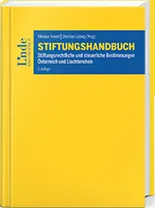
The Foundation Handbook by Arnold/Ludwig (eds.) has already been published in its 3rd edition (as of April 2022). It is a compact and clearly structured presentation of the foundation-law and tax-law provisions governing the Austrian private foundation and the Liechtenstein foundation. It facilitates entry into the subject matter and equally serves as a working aid for practitioners.
ORDERS of the Foundation Handbook can be placed using the attached order form.
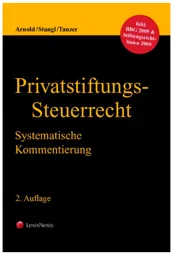
An in-depth systematic commentary on foundation tax law is provided in Arnold/Stangl/Tanzer, Private Foundation Tax Law (2nd edition, as of 2010).
ORDERS of the systematic commentary on foundation tax law in its second edition can be placed using the attached order form.

For the foundation board it is of decisive importance to be thoroughly informed about its duties, rights and obligations. The work Arnold/Ginthoer, The Foundation Board therefore offers members of the foundation board, as well as founders, beneficiaries and all those involved with private foundations, an easily accessible overview of the most important areas of the private foundation. The work has just appeared in its 2nd edition (2025).
The content of this website is maintained by Dr. Nikolaus Arnold and the team of ARNOLD Rechtsanwälte GmbH, who have for many years been ranked at the top of the Austrian market for Private Wealth.
Recognised as the leading law firm for private clients and founders in the Austrian industry ranking.
International top rating for Private Wealth Law in Austria, for many years without interruption.
Author of the leading commentary on the Private Foundation Act and co-editor of the specialist journal Der Gesellschafter.
Subscribe to our newsletter to stay informed about the current developments concerning the private foundation.
E-mail address